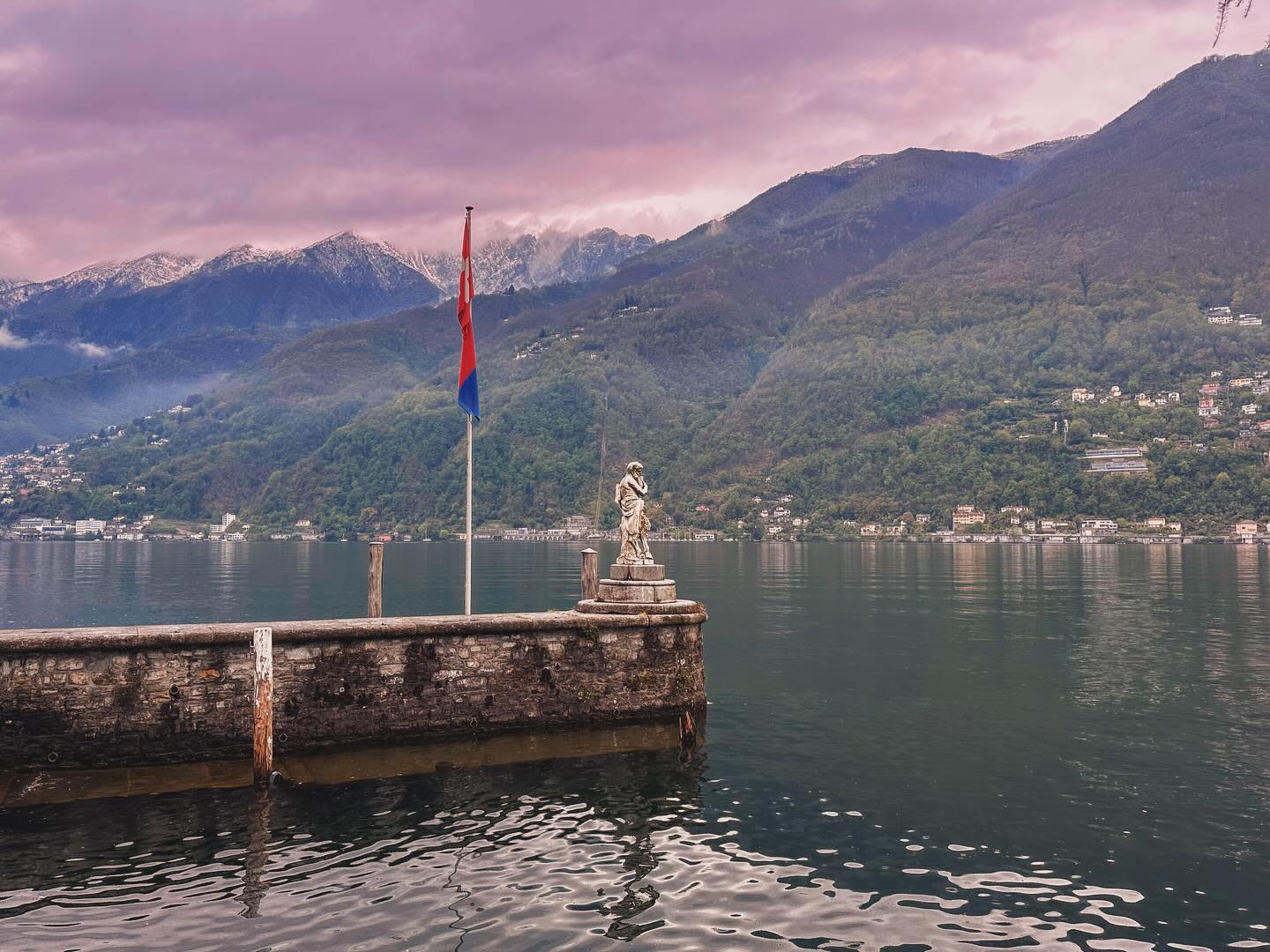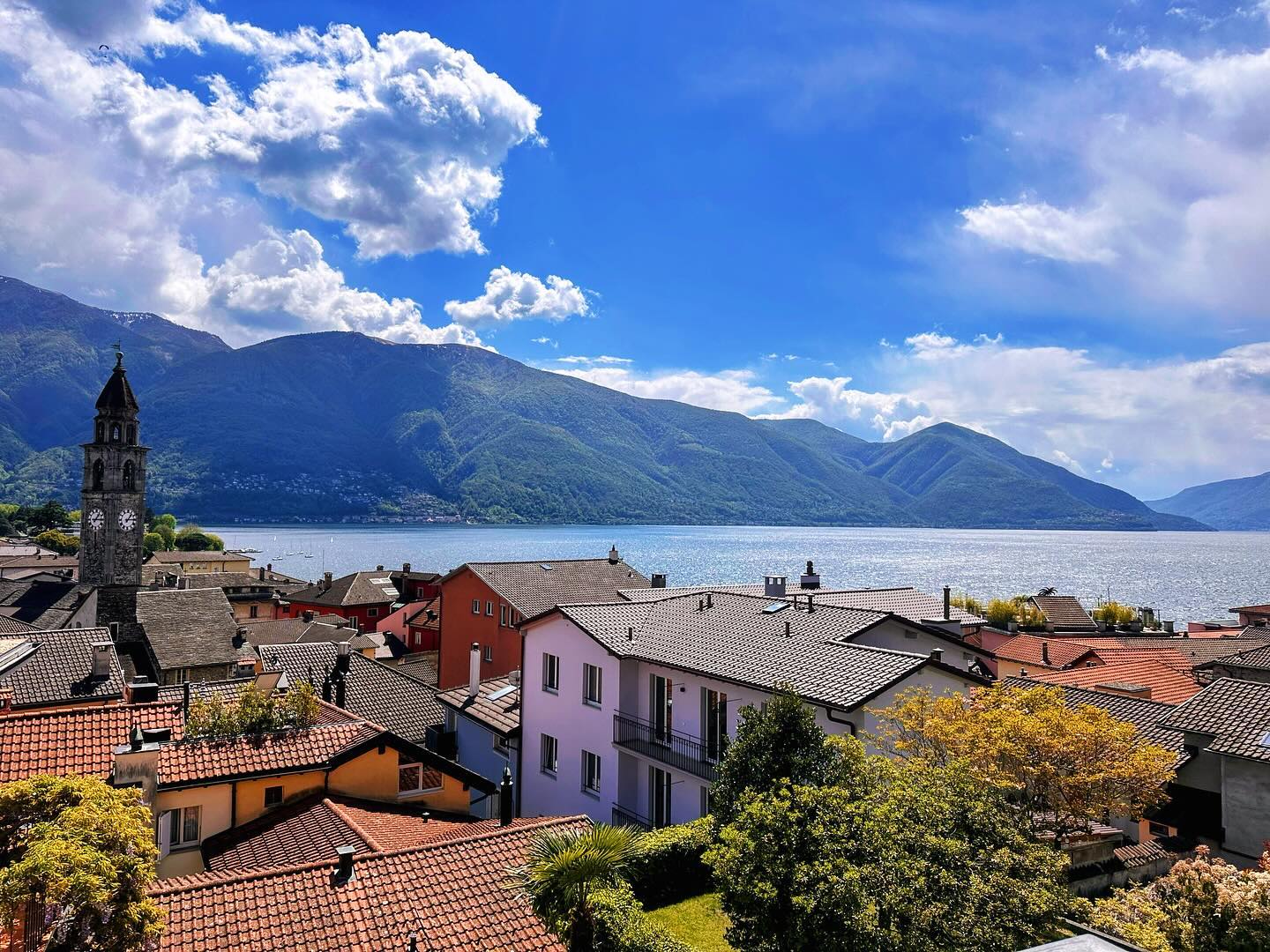
I have been to corners of Switzerland that felt engineered for admiration, all precision and performance, and then there is Ticino, which feels like the country finally exhaled. This is the Italian-speaking canton south of the Alps, where the signage shifts languages, the food improves considerably, and the lakes turn a shade of blue you will not fully believe until you are standing at the edge of one. I split my nights between Ascona and Lugano, and I would tell anyone planning this trip to do exactly the same. Ascona is the more refined of the two: small, pedestrian, strung along Lake Maggiore with pastel buildings stacked behind a waterfront where you can walk for an hour without needing a destination. Lugano has actual city energy, better transport connections, real shopping, and a density that Ascona cannot match. Neither one alone tells the full story, and choosing between them is a mistake you simply do not need to make.
From Ascona, take the boat out to the Brissago Islands. It is a short crossing, and the botanical gardens there are among the most genuinely pleasing I have encountered anywhere in Europe, not because they are grand in a formal sense but because they feel tended with real enthusiasm, as if every decision was made by someone who actually cared about the outcome. If you have a car, drive the Centovalli valley, pushing through Intragna and out toward the French border. I will say plainly that this is one of the most underrated drives in the entire Alpine region, and most people miss it completely because it never appears on the obvious itinerary. In Lugano, skip Monte San Salvatore entirely and take the funicular to Monte Brè instead. The view is better, the crowds are thinner, and you will not feel processed. For eating, my rule in Ticino is simple: find a place where the menu is written in Italian and the prices are on a chalkboard, then walk in without hesitation. The Ascona waterfront charges you for its postal code more than for its cooking. Go one street back. Order polenta with local sausage, lake fish if it appears on the board, and a glass of Ticinese Merlot. I mean that last part seriously. Ticino produces a red Merlot that will make you reconsider everything you thought you knew about the grape.
The money situation deserves honesty: this is still Switzerland and the prices will remind you of that without any prompting. A sit-down lunch runs thirty to fifty francs without effort, and dinner pushes well beyond that. My approach is a generous lunch as the main event, something lighter in the evening, and mornings handled with provisions from the Co-op or Migros. If hotels in Ascona feel too steep during peak season, stay in Locarno instead. It is ten minutes by bus, shares the same lake access, and runs noticeably cheaper. The detour I would make without any hesitation is Bellinzona, the cantonal capital, about twenty minutes north by train. Three medieval castles sit above the old town, all UNESCO-recognized, and the full circuit takes half a day to walk and costs almost nothing. It gives you a completely different understanding of what Ticino actually is beneath the lakeside cafes and the afternoon light and the sunbathers who have figured out that this place rewards the people who planned for it.
Go to Ticino before the broader crowd catches on, and when you get there, rent a car for at least one day so you can get properly lost in the valleys behind the lake.