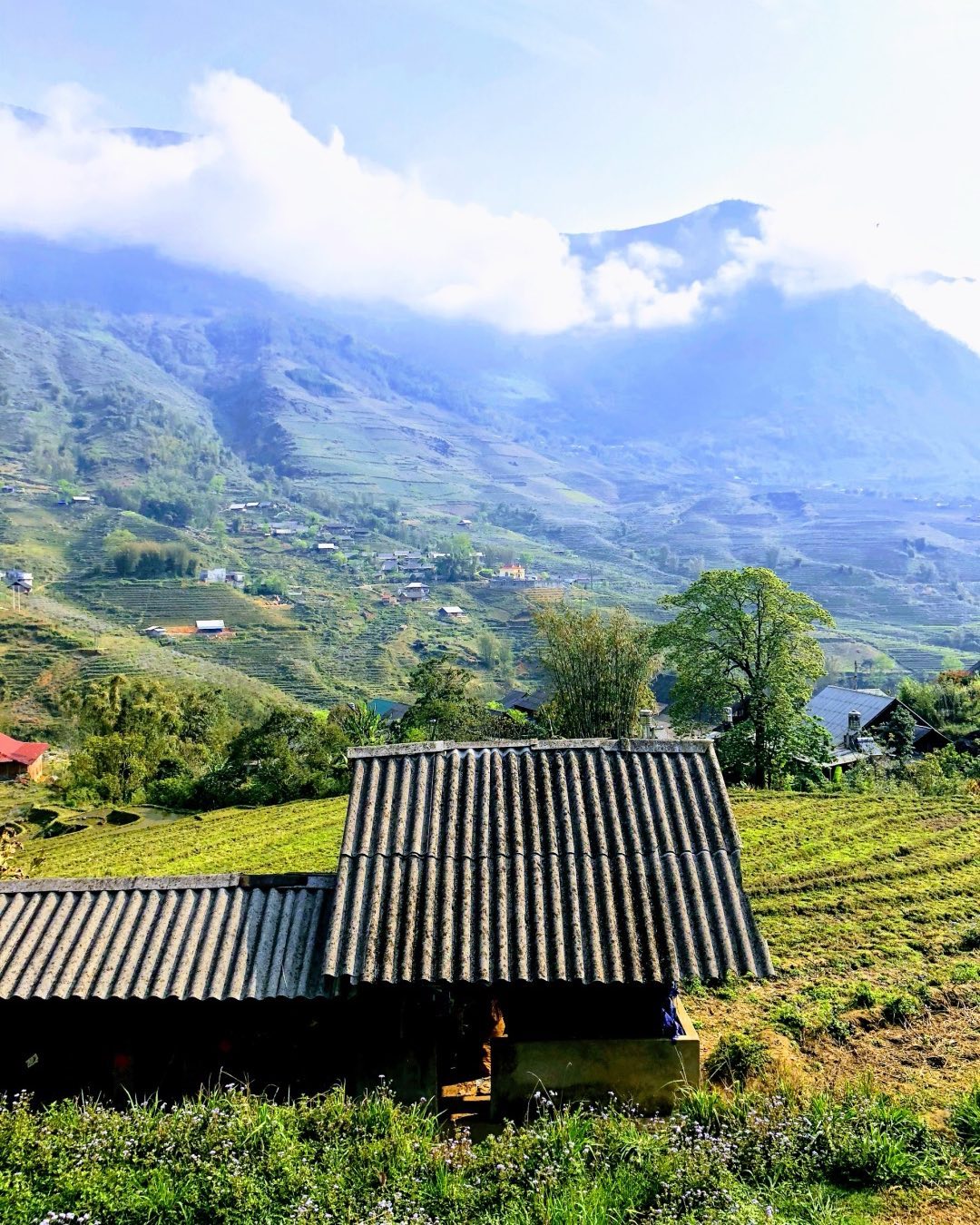
If you want to see a side of Vietnam that few travelers ever actually find, you have to be willing to take the overnight sleeper train from Hanoi and commit to the ritual of it. Book a soft-sleeper berth on the Victoria Express if your budget allows, because there is something that happens on that ride that no flight or private car can replicate. You fall asleep at sea level with the city noise still rattling in your head and you wake somewhere else entirely, the air already thin and cool as the train pulls into Lao Cai station, a short minibus ride up the switchbacks away from Sa Pa town. I have made this journey three times now and I remain convinced that arriving by train rather than teleporting yourself there by cable car or morning bus matters more than most travelers are willing to admit. Come between September and November and the terraced rice paddies hang gold and heavy with harvest. Come in March or April and the whole valley turns an almost aggressive shade of green. Avoid Chinese New Year and the major Vietnamese holidays unless your idea of a good time involves being pressed between tour groups on narrow paths.
The error nearly everyone makes is treating Sa Pa town itself as the destination. It is not. The main strip has been overbuilt into something resembling a ski resort that lost its character, and while I always stop at a street stall for a bowl of pho or a bowl of thang co before heading out, lingering in town is a genuine waste of the mountains surrounding you. Skip whatever the hotel desk tries to arrange and go directly to Sapa O'Chau, a social enterprise that connects travelers with women from the Black Hmong community. These are not guides performing an ethnographic show for your camera. They know every trail, every shortcut, every family whose home you might stop at for tea, and the money flows back to their villages. The Cat Cat village loop has been walked smooth by too many day-trippers and now feels engineered for people who want one photograph and a coffee. Walk the full-day route to Ta Van or Giang Ta Chai instead, where the path narrows and the crowds thin out and you remember why you came this far. If Fansipan is calling you, do it on foot with a proper guide. The cable car deposits you at a concrete plaza ringed with souvenir shops and strips the experience of everything that makes it worth having.
For accommodation I keep returning to the Hill Station Signature Restaurant and its attached guesthouse. The food is genuinely good, the building has a real fireplace for the cold nights, and the cold will find you regardless of what month you arrive, so pack layers you actually intend to use. Budget thirty to sixty dollars a night for real comfort, and let breakfast belong to the market stalls: grilled corn, sticky rice wrapped in banana leaf, black sesame treats folded in paper. Order thang co at least once if you are the kind of person who eats first and asks questions later. It is a Hmong horse-meat stew with the depth of something that has been cooking since before anyone can remember, and it is far better than most Western visitors expect. Give yourself three nights minimum, because two is the most common itinerary and two is simply not enough. Three nights means you can recover from the train, spend a full day on a serious walk, and still have one slow morning wandering outlying villages without checking the clock every hour.
Book your train berths weeks ahead because the soft-sleeper compartments on the Victoria Express sell out fast, and contact Sapa O'Chau before you leave home so you are not scrambling for a guide from a position of desperation on your first morning.