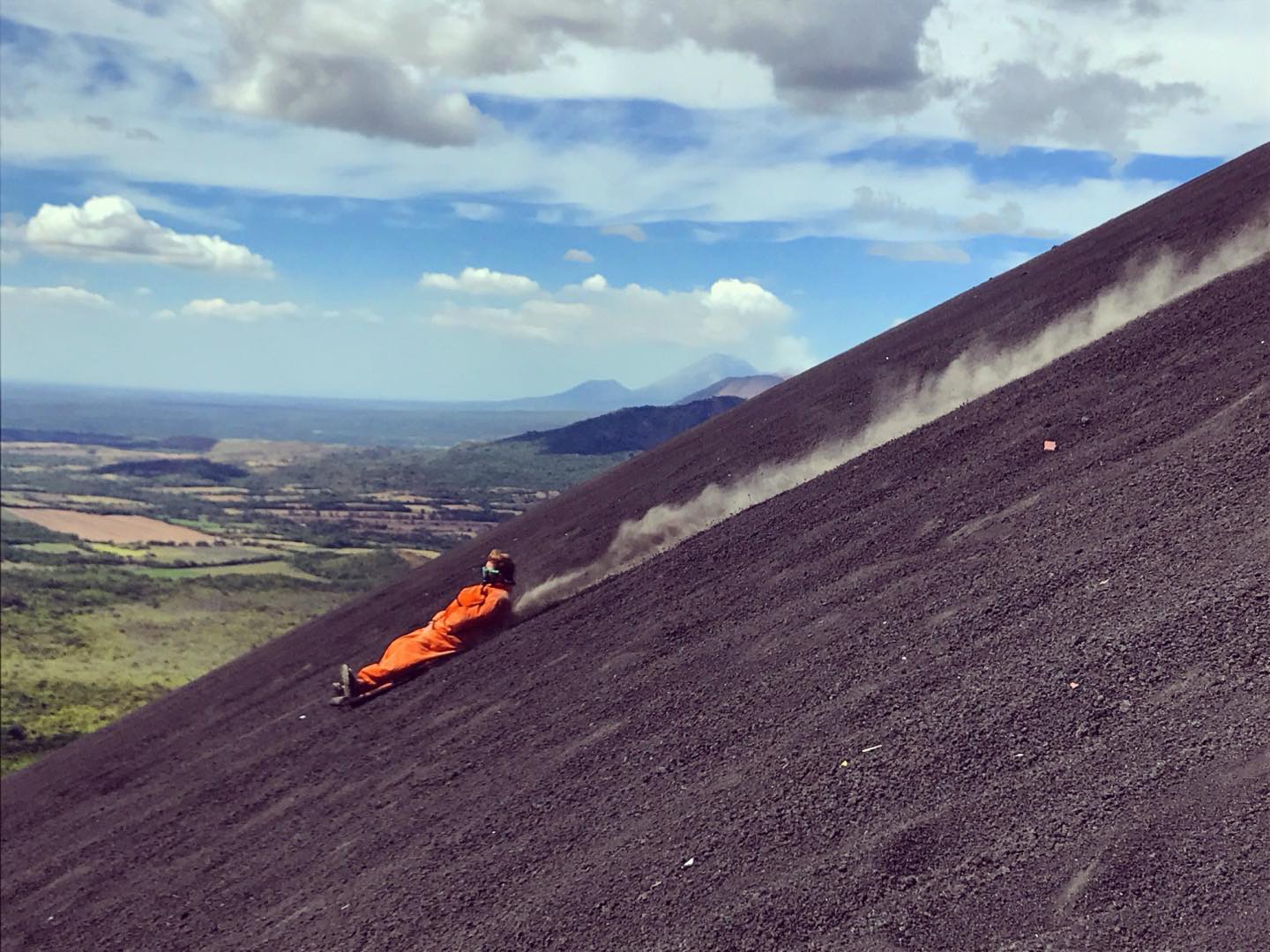
Cerro Negro is the reason you fly into León, full stop. The volcano sits about forty-five minutes outside the city, and if you are making the trip, you are going to board down it — not hike it, not photograph it from the road like someone who drove all this way to stay cautious. The operator everyone uses is Bigfoot Hostel, and they run the whole operation well: jumpsuits, goggles, and a wooden sled that looks assembled in someone's garage, because it basically was. The hike to the summit takes about an hour across loose black volcanic rock, the kind that shifts under every step and works its way into your socks, your shoes, your bag, your hair. Wear closed-toe shoes with real ankle support — I am speaking from painful, personal experience. At the top on a clear day you can see the Pacific, and the crater still vents sulfur in slow, lazy plumes, a useful reminder that this volcano last erupted in 1999, not 1899. The descent hits around fifty miles per hour if you actually commit to it. Most people get scared halfway down and drag their feet to slow themselves. Do not be most people. Lean forward, trust the sled, and let it go.
León deserves more than a single night used as a logistical pit stop. It is the intellectual and revolutionary heart of Nicaragua, and the Catedral de la Asunción alone justifies an extra twenty-four hours on your itinerary. It is the largest cathedral in Central America, and for nearly nothing you can climb to the roof and walk across its white domes with the whole city spread below you. The murals covering entire building faces throughout the streets are serious political work, not decoration, and they give León a weight you simply do not feel in other Central American cities. For food, avoid the restaurants ringing the main plaza that exist purely to extract dollars from people carrying backpacks. Walk a few blocks in any direction and find the comedores serving gallo pinto, tajadas, and whatever protein came in that morning for under two dollars a plate. If you want to be social, Bigfoot is genuinely well run and the crowd tends to be good. If you want quiet and a proper bed, La Perla is a solid boutique option with a courtyard and mattresses that will not leave you wrecked.
From León, the main decision is whether to push north toward Estelí and the highland coffee country or route toward the coast. Poneloya Beach is close and technically accessible, but I would not waste the detour — it simply does not deliver. If the Pacific is the goal, treat León as a waypoint and save your beach time for the Corn Islands, which are a different trip entirely and worth every logistical headache required to get there. If you stay inland, Estelí is genuinely underrated: the cigar factories offer free tours, and the town has a slower, cooler-climate ease that León lacks entirely. Nicaragua remains one of the least expensive countries in the Americas to move through, and covering accommodation, food, and the volcano boarding excursion through Bigfoot — which runs around thirty dollars — on forty to fifty dollars a day is realistic without any real sacrifice.
Go sooner rather than later, and when you reach the descent, do not slow down.